Me 264 V1
The Me 264 came about as the result of Messerschmitt wanting to work outside the prewar decision that the RLM had placed on them that restricted them to designing and producing fighters and some general discussion in the industry that was prodded by the RLM concerning the idea of bombing the U.S. from European bases should the U.S. enter the war against Germany. While it was thought that the material damage that could be done would be minimal the propaganda to be gained and the effects on morale would be worth the effort. The industry was asked by the RLM for proposals for aircraft for this purpose but did not issue a specification and it was stressed that the aircraft would be a long term low priority project. Focke-Wulf, Junkers and Messerschmitt submitted proposals, the Fw-300A, which was an extended range version of the of their four engined bomber project, the Junkers 290 which was in the process of being evolved from the Ju 90 and the Me 264 which was an entirely new design.
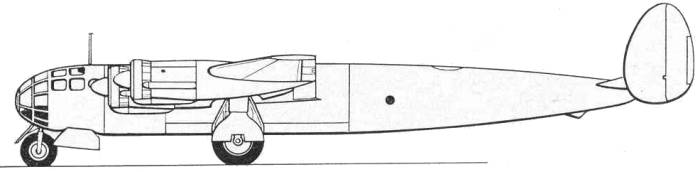
Dubbed unofficially the Amerika Bomber, the Me 264 was an extremely advanced design and although the RLM did not, at this stage of the war consider any decision relating to a long range bomber as a matter of urgency, they did request additional studies based on the use of six engines from all three companies. Due to Dr. Messerschmitt's influence, permission was granted for detail design to proceed and construction of three prototypes to commence. work began in 1941 and the first prototype, the V1 was completed in late 1942. Messerschmitt envisioned the aircraft as being capable of carrying a 3,968-lb bomb load to New York with the actual attack taking place at extreme high altitude to avoid interception. All defensive armament being deleted in order to save weight and drag. For simplicity it was powered by four Junkers Jumo 211J-1 engines complete with cowlings and radiators from the Ju 88A-4. Flown for the first time in December of 1942 and for all intents and purposes a flying test bed as by then the U.S. had entered the war and the RLM had firmed up their requirements for the Amerika Bomber. What the wanted was a larger bomb load and effective defensive armament that would require the use of six engines for the required performance.
For this Focke-Wulf proposed the Ta 400 which was to be evolved from their early Fw 300A, Junkers offered the Ju 390 and Messerschmitt tender the Me 264B with six engines. The RLM favored the Ju 390 owing to the high number of common parts with the Ju 290 which was then in production and Messerschmitt was instructed to modify the second and third prototypes to the maritime reconnaissance role. The RLM requirements were not finalized until March of 1943. By late 1943 the V2 was being readied for ground tests when it was destroyed by an Allied bombing attack. Various other changes were considered for the V3 aircraft but by the beginning of 1944 strategic material shortages prevented committing the 264 to production and the program was terminated before the V3 was finished. At this time the first prototype was to have been placed at the disposal of the Osermaschinen company for use as a test bed for a steam turbine power plant that was to use a mixture of solid and liquid fuels (65% pulverized coal and 35% petrol), however the V1 was destroyed in a bombing raid before its conversion could take place.
The Kit
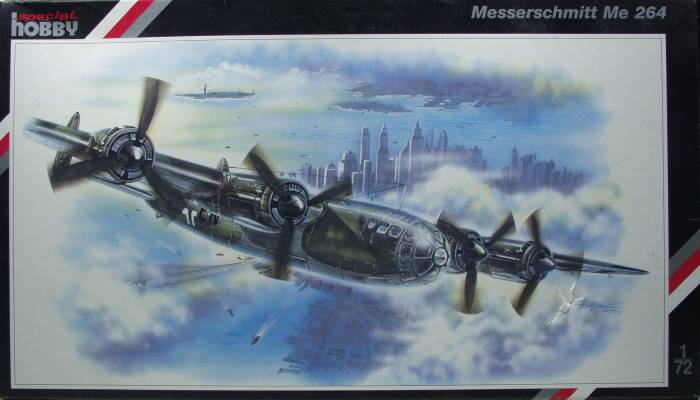
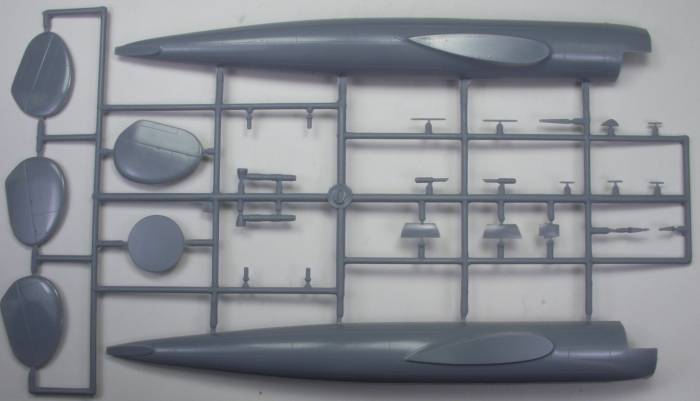
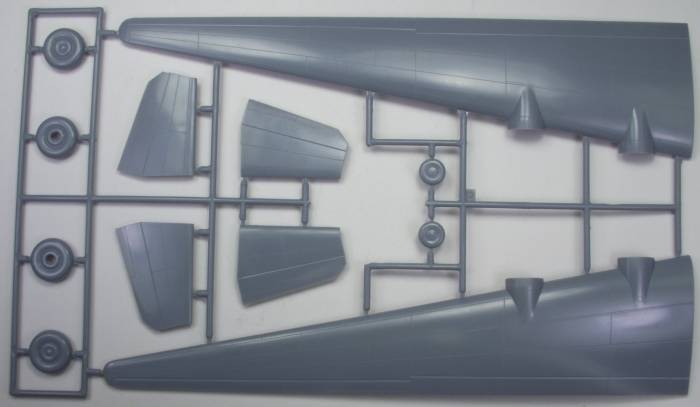
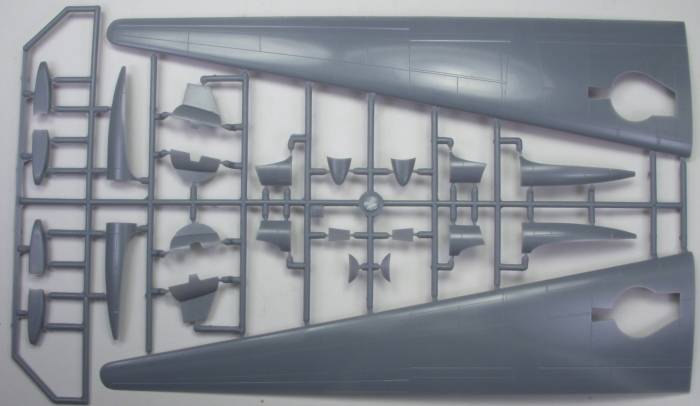
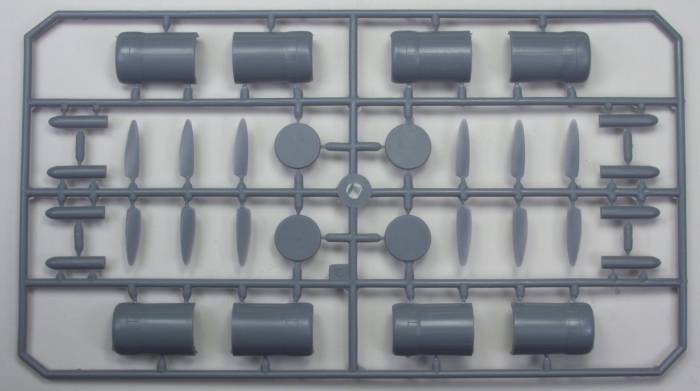
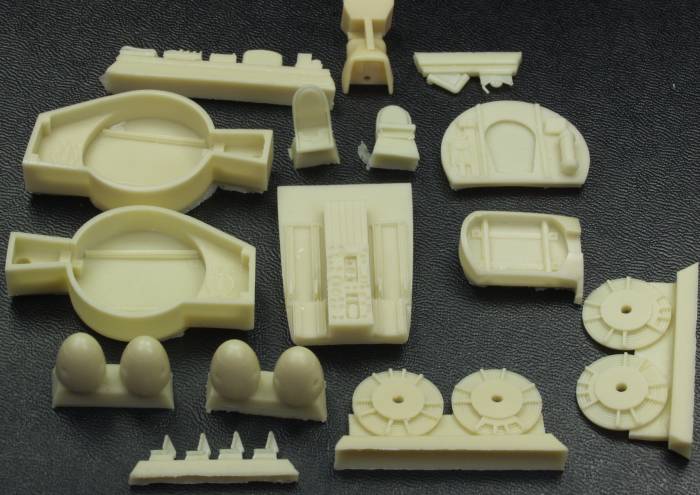
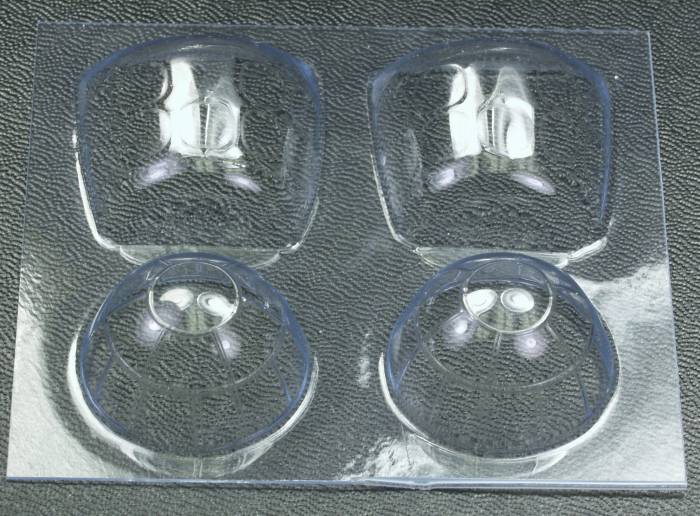
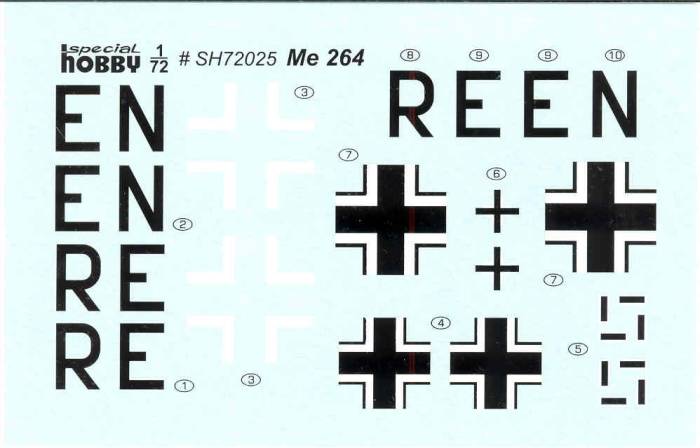
The Special Hobby Me 264 comes in one of those dreaded end flap boxes with rather optimistic artwork of the ME 264 flying over New York City. Inside the box there is one large bag and inside it are two others. The large bag contains every thing except the resin parts and the decals which are in separate bags. The clear parts, which are vacuformed were in with the rest of the parts, not the best way to do that ! The parts are molded in a dark gray plastic and feature recessed panel lines that are a nice size for the scale and uniform in appearance. The surface is glossy but not totally smooth but not as bad as many limited run kits. A good coat of primer should take care of most of it.