He 280
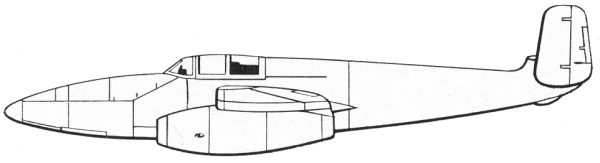
The Heinkel 280 had a number of firsts to its credit, it was the first jet aircraft built specifically as a fighter as opposed to a test bed for jet engines. It had space for armor and armament. It was also the first aircraft to be equipped with an ejection seat and the first aircraft from which someone used an ejection seat successfully. For the first time in Germany an aircraft was equipped with a nose wheel undercarriage, something even the early models of the Me 262 didn't have. It was also ready to fly a year ahead of its competition the Me 262. It was ahead of its time but unfortunately for Ernst Heinkel, the powers to be felt his company was better at building bombers and no contract for production was forth coming. It did however convince those in charge of the superiority of jets over piston power aircraft which under the circumstances may have well justified its existence.
The Kit
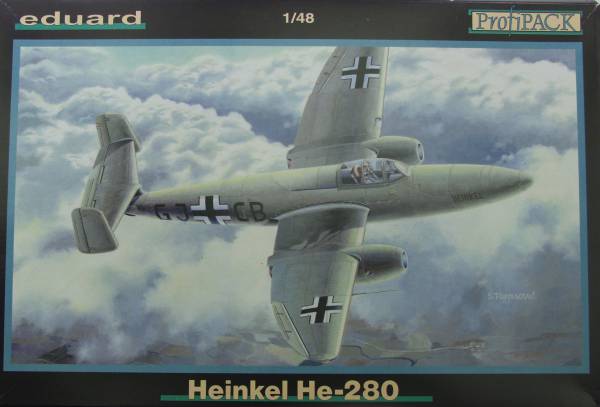
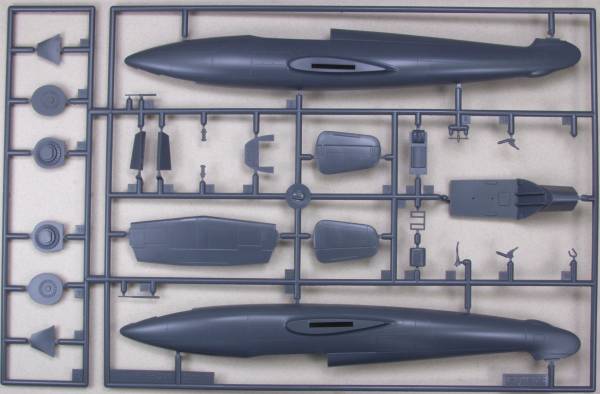
The Eduard He 280 comes in a top open two part box with attractive artwork on the top. Inside the box there are two large bags with parts molded in a dark gray color. There are several small bags, one with the clear parts, one with resin parts, one with photoetch parts and one with masking. The finish is smooth with recessed panel lines and fastener detail. The panel lines were a good size for the scale and were consistent. I did not find and surface defects worth mentioning on any of the primary airframe parts. I did not find any ejector pin marks that would show when built. There was some parting lines to clean up on some of the smaller parts. The parts were almost flash free. The control surfaces are all fixed and I thought the lines defining them could have been more prominent. The kit comes with engine housings for both the Heinkel HeS 8a engines and Jumo 004 engines. With the photoetch and resin parts the cockpit is well detailed. The wheel wells are boxed in but are barren detail wise. They are not very large so it's not all that noticeable. Altogether there are 87 parts in gray, not all of which are used. The kit also includes a die cast nose weight. See photos below.
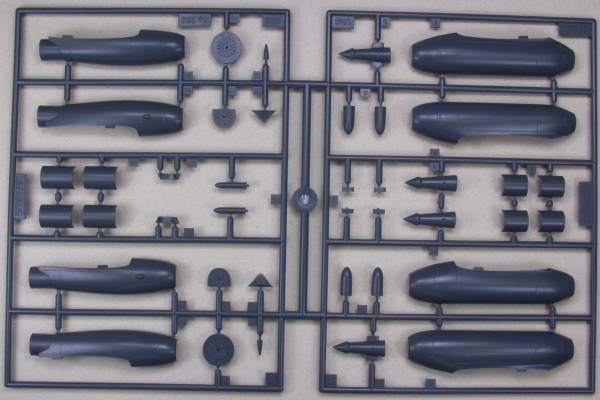
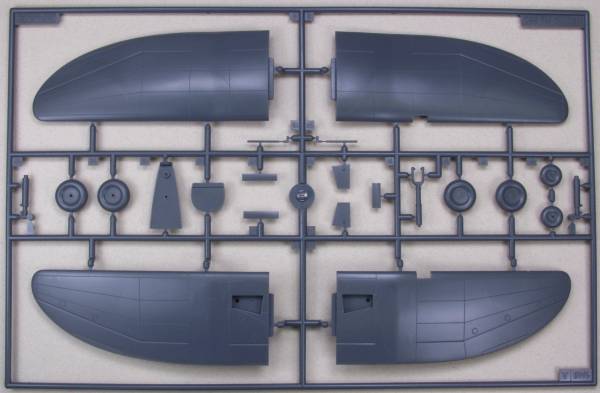
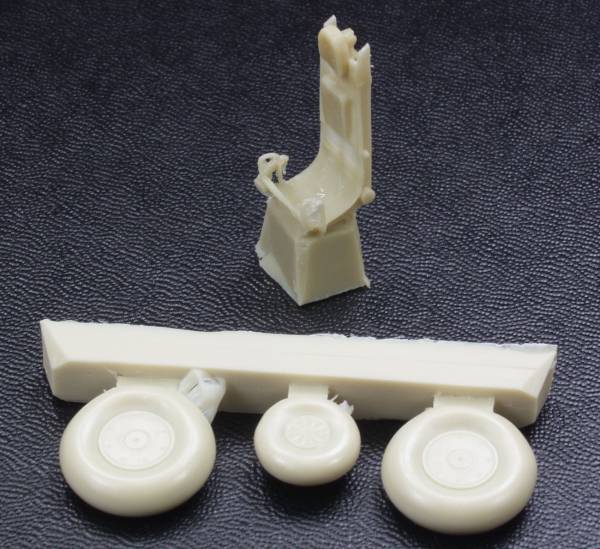
The resin parts consists of an ejection seat and and replacement weighted tires. The parts are molded in a tan colored resin and the ejection seat exhibits some flash but has a higher level of detail than the plastic parts. The wheels are about the same as the plastic parts detail wise except for being weighted and not having and seams to deal with. There are 4 resin parts. See photo below.
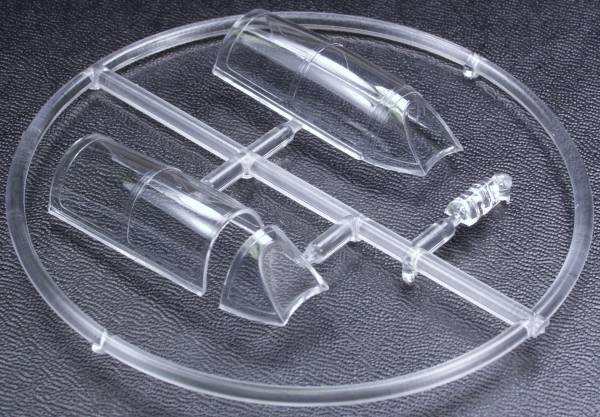
The clear parts are both thin and clear and you get both a closed and open set. The frame lines are nicely done and the kit comes with a masking set. There are a total of 4 clear parts bringing the kit total to 95. See photo below.
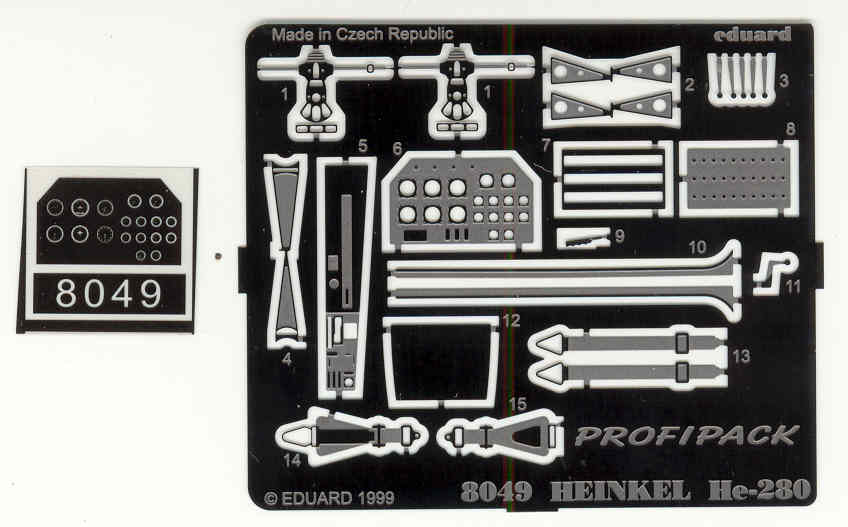
The kit also comes with a small fret of Photoetch with primarily cockpit parts but is does include torque scissors as well. See photo below.
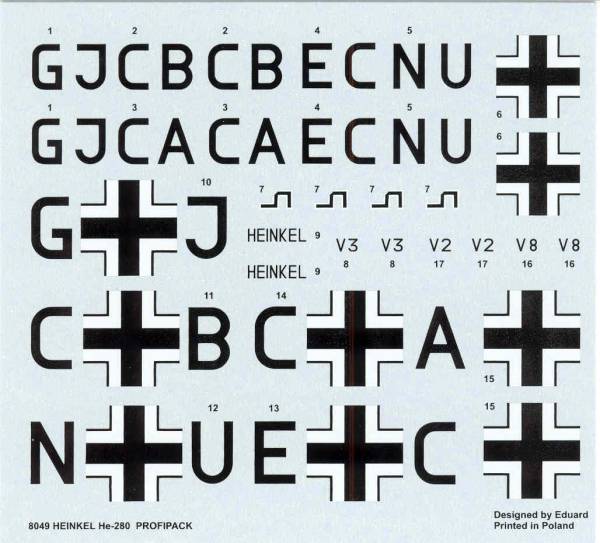
The decals are thin and well registered and include markings for the V2, V3 and V8 aircraft. The V8 variant is shown in the instructions as the only choice for using the Jumo engines however the V8 was equipped with a V tail and that option is not supplied, however the V2, while originally equipped with the HeS engines, had these replaced at a later time with the Jumo engines. There are no stencil markings provided and the swastikas are the assemble them yourself variety. See photo below.
The instructions consist of a folded sheet that divides up things into small panels. The first panel has history and specifications, the second has the typical warnings, icon chart, paint chart and parts map. There are four panels of assembly instructions followed by two panels of marking instructions. There is a separate small sheet detailing how to use the supplied masks.
Conclusions
The kit is well detailed right out of the box with
the resin and photoetch parts. Most reviews treat the kit favorably and
there are no major stumbling points. Like most kits from the Czech
Republic, it does not have alignment pins if that makes you squeamish.
For those not wishing to use the resin or photoetch a perfectly
acceptable kit can be made using the plastic parts alone. This is a
nice model of a historically important aircraft that should fit right
in with a collection of early jet aircraft.
Links to kit build or reviews
A build / review can be found here.
References
"Warplanes of the Third Reich" by William Green
"The First Jet Aircraft" by Wolfgang Wagner
"German Jet Aircraft" by Hans-Peter Diedrich
The Build
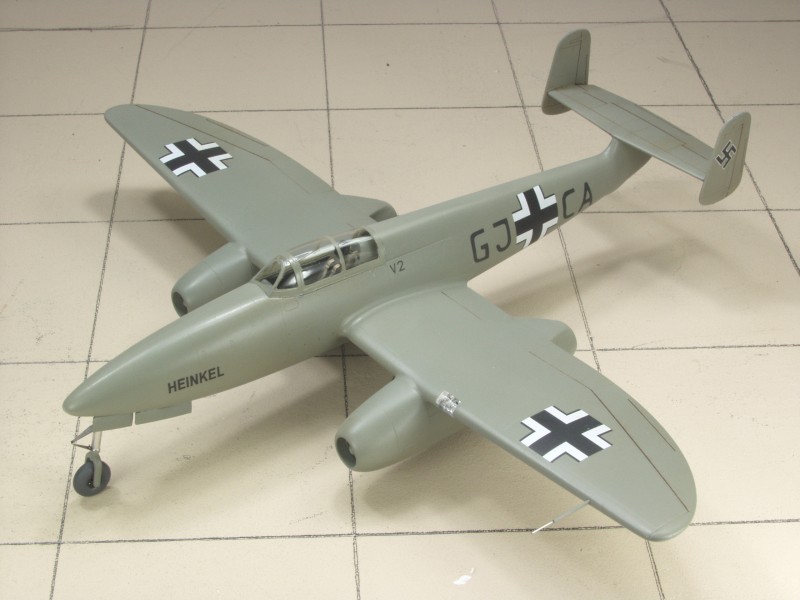
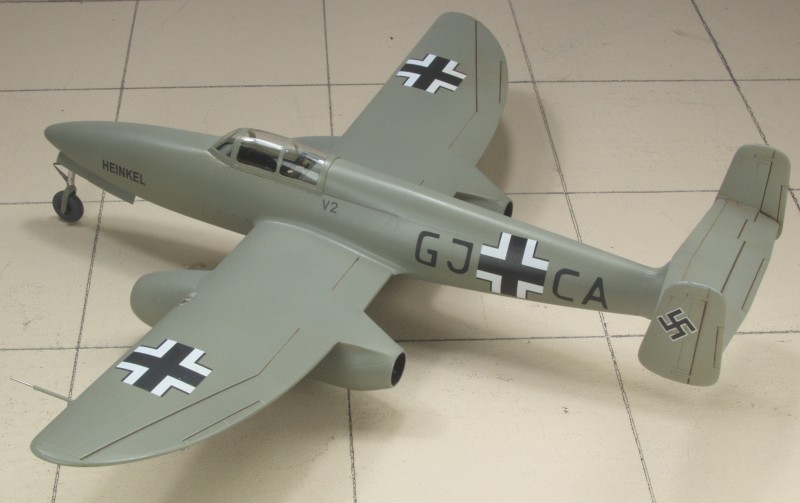
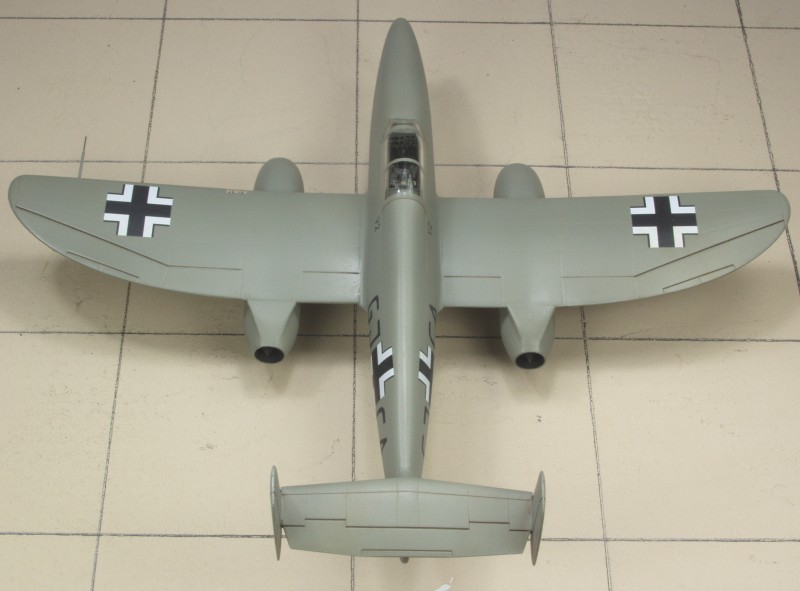
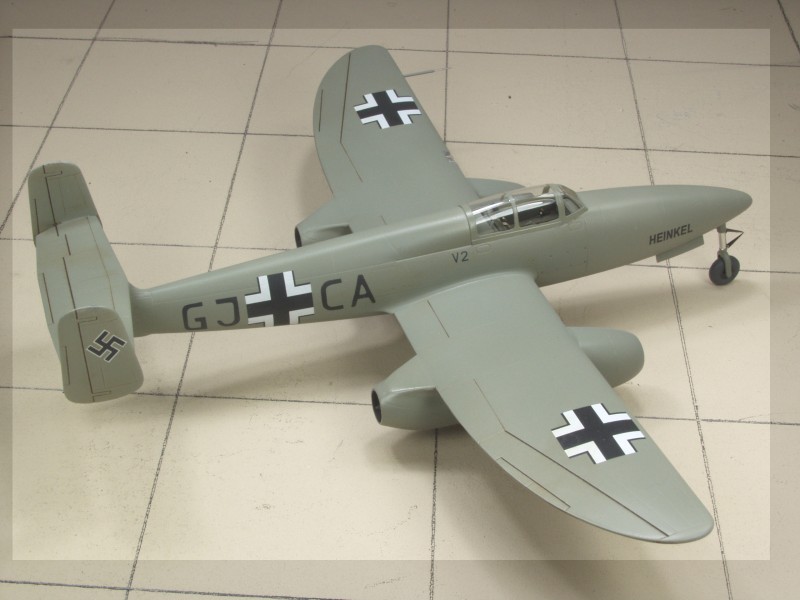
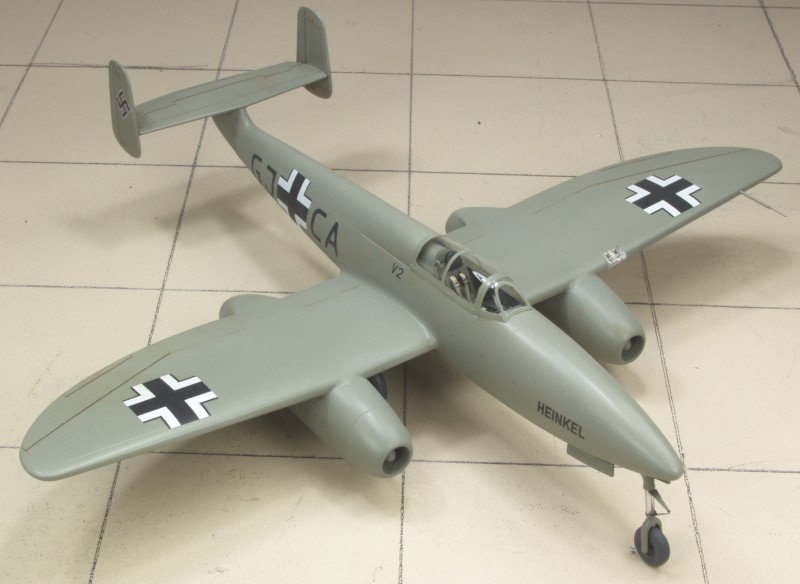
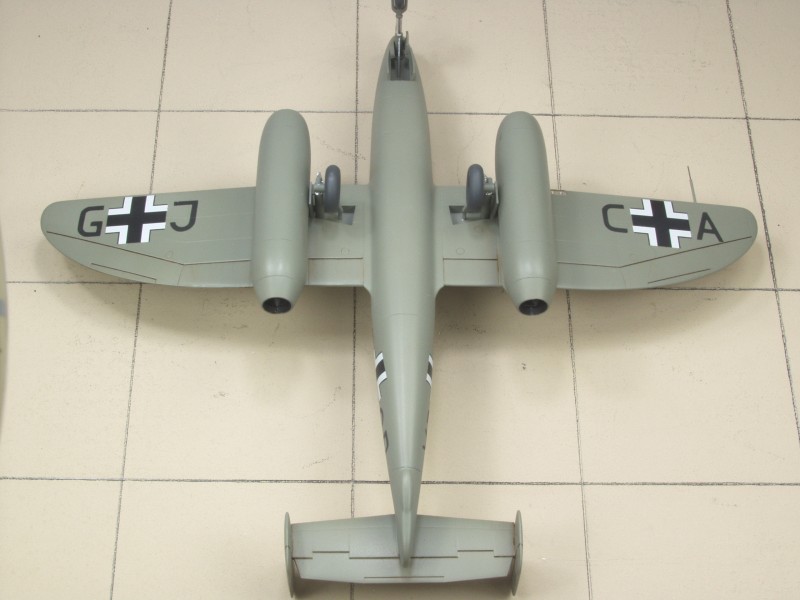
I'm not going into a lot of detail here, this is a pretty simple kit and fits together reasonably well. As usual construction starts interior parts, I built up the Jumo engines and then the cockpit. The film for the cockpit instruments in my kit appeared to be under developed and even when placed on a white surface did not show up well when the instrument panel was assembled. One of the ejection seat actuator handles was missing on my seat so I made a new one from some small gauge wire. Not perfect but close enough as I plan to have the canopy closed anyway.
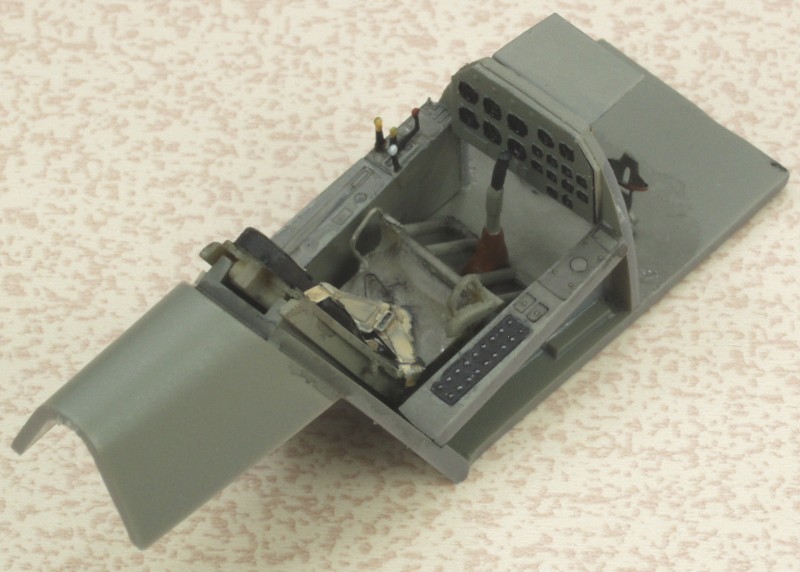
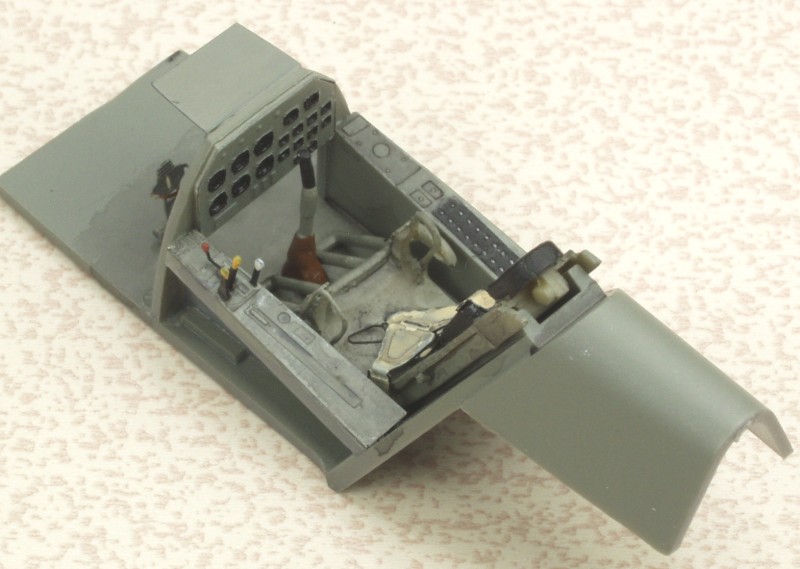
Not a lot to see concerning the rest of the assembly. While gluing the fuselage halves together one side of the cockpit dropped below the ledge it's supposed to sit on and caused me to end up with a step in that area on the bottom. I didn't notice this till the next day when I noticed the cockpit sitting crooked. I was able using a dental tool to pop it back into place but it was too late for the step on the bottom which required some sanding and filler. I debated on trying some modulated finish on this to break up the monotony of a single color but decided against it as photos showed they were kept clean, no doubt kept inside when not being flown. Panel lines seem visible to some extent in photos so I will use a wash to highlight those.
Decals turned out to be a disappointment. The crosses went on well but the lettering fractured on me. Had I known in advance I would have coated them first but since most of them were large enough to cut stencils for I went that route. The HEINKEL decals fractured as well and for those I printed my own decals. In the process of masking to use the stencils I peeled off one of the crosses. In the end I replaced the crosses as well with some from a Techmod generic sheet. The only kit decal used was the V2 marking.
Updated 5/20/17