Piaggo P.108B 

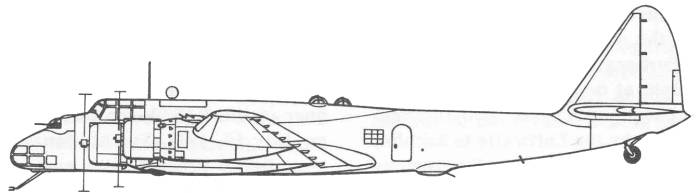
As a result of the
advanced development work carried on by Piaggio during the 1930's the
company had the distinction of building the only four engined heavy
bomber to be employed by the Regia Aeronautica during the Second World
War. Although the production figures were insignificant compared to the
number of heavy bombers built by the United States and Great Britain,
The P.108B was an excellent machine bearing a strong resemblance to the
B-17, but differing greatly in detail. The prototype flew in 1939
powered by four 1500 hp, eighteen cylinder engines. An outstanding
innovation was the use of two wing mounted turrets, each with two
12.7-mm machine guns operated by remote control from sighting domes
atop the fuselage. Two additional 12.7-mm guns were in the nose and
semi-retractable ventral turrets, while two more guns were operated from
lateral hatches, making a total defensive armament of eight weapons,
extremely heavy by Italian standards. The maximum bomb load was 7.720
lb. Alternatively, three torpedoes could be carried.
So successful was the prototype that an initial batch of twelve
pre-production machines was followed by substantial orders (by Italian
standards) were placed and 163 aircraft were eventually produced. The
P.108B's took part in night raids on Gibraltar, having been fitted with
flame dampers on the exhausts and having the nose turret removed. The
surprise had a great effect psychologically as it was not know at that
time that Italy possessed bombers with that range. The P.108B later served in the
North African and Russian theaters and in all operations over the
Mediterranean Sea. At the end of the war only three P.108B's survived.
Large numbers were lost during wartime operations although it's open to
debate whether the majority were lost due to enemy action or to
possible failures of the bombers themselves.
The Kit
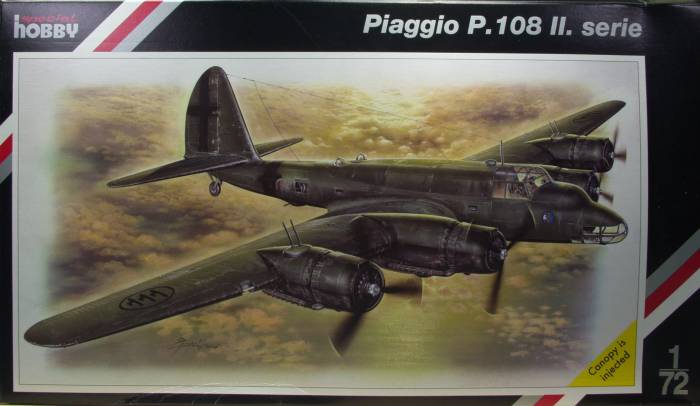
The
Special Hobby Piaggo P.108 comes in one of their standard end flap
boxes that everyone loves to hate. On the front of the box is nice
artwork of the aircraft in flight. Inside the box is one bag which
contains all of the parts except for the resin parts which are bagged
separately in a zip lock bag. The clear parts are injection molded but
were mixed in with the rest of the injection molded parts, never a good
thing but in my kit they were unscathed. The parts are molded in a dark
gray plastic and feature recessed panel lines. The panel lines are
uniform and typical size wise for the scale. The surface has a matte
finish but is quite smooth and I found no sink marks or other surface
irregularities on any of the parts. There was some minor scuffing on
the parts from shipping. The control surfaces are all fixed and the
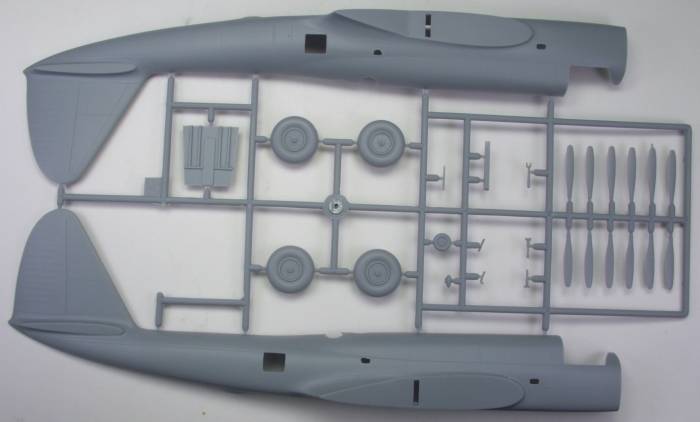
fabric areas were light and very nicely done. The demarcation lines
around the control surfaces were a little shallow for my liking but
that's easy enough to fix. The parts had a light amount of flash on
them but not bad for a limited run kit and as usual no alignment pins.
There were no ejector pin marks that will show after assembly. The
propellers are the assemble yourself variety that the European
manufacturers seem to like. The tires have nice hub detail, no tread
and are not weighted. The flight deck has a reasonable amount of detail
for the scale. The engines are rather shallow in detail but should look
OK once painted up. The wing to fuselage join has a spar that fits
through the fuselage and into a groove in each wing which should
provide a good solid wing to fuselage joint. The tail planes however
are just butt joints and would benefit from some additional
strengthening. The box states that the kit is a Series II aircraft
which appears to mean that it has the flame dampers and the modified
nose used on the Gibraltar raids, a standard aircraft can be built as
well as both noses are supplied and the flame dampers are
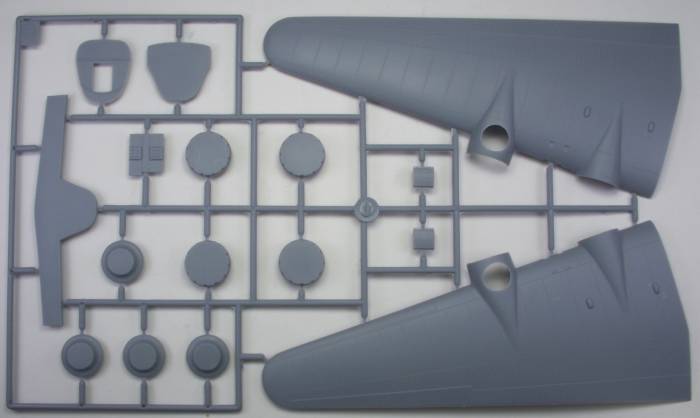
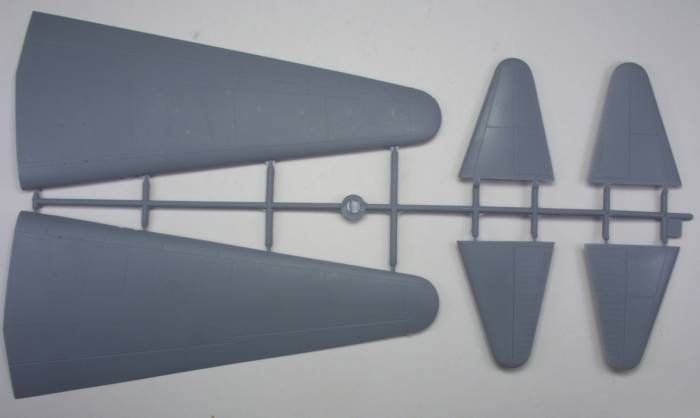
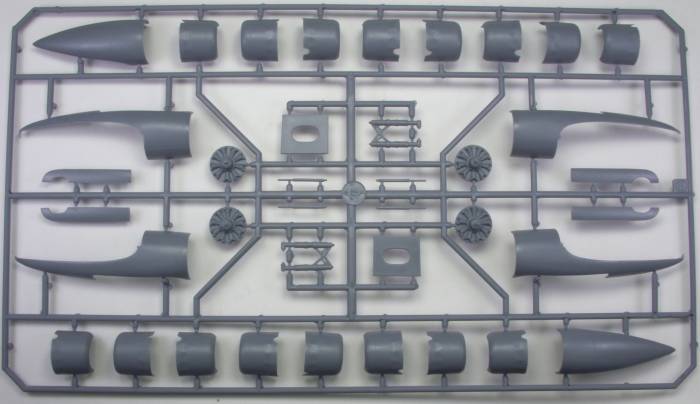
separate parts that can be left off. Altogether there are 88 parts in
gray. See photos below.


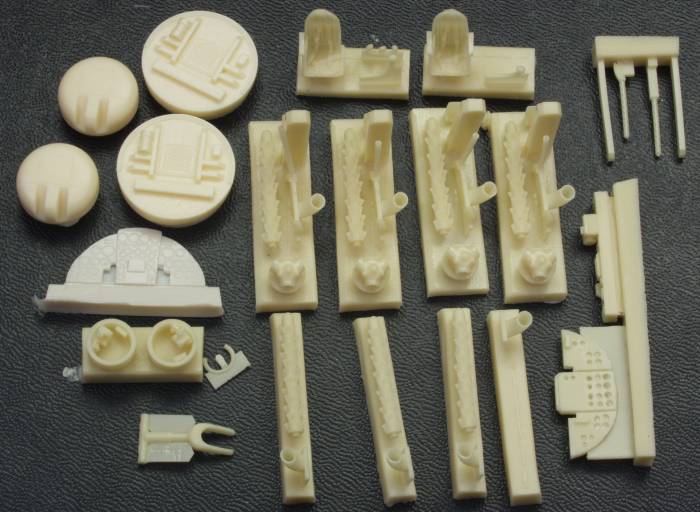
The resin parts are cast in a tan color resin and include seats for the
flight deck with belts and harnesses molded in, forward bulkheads for
the gear bays, instrument panels, guns, propeller hubs, turrets and
bases and a nice set of flame dampers for the exhausts. Unfortunately
one of mine was missing in action but since I plan on building a series
one aircraft they are not needed anyway. The parts were nicely molded
and I found no short shots or pin holes in my parts. There are a total
of 40 resin parts. See photo below.

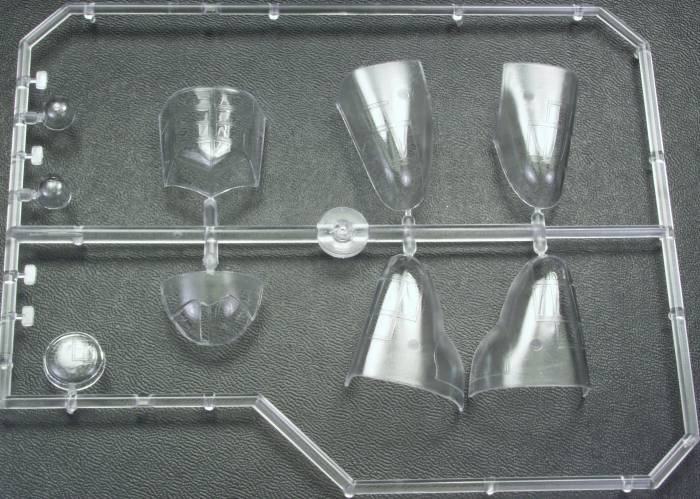
The clear parts are injection molded and are thin and clear. Areas to
be painted have a rough surface. As mentioned above both noses are
supplied so either version of the aircraft can be built. Altogether
there are 12 clear parts.

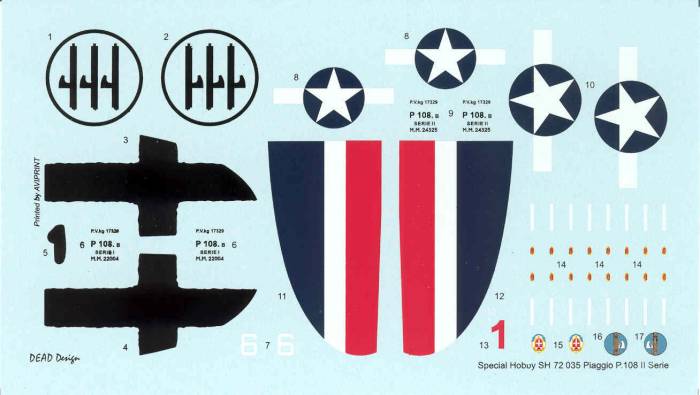
The decals are thin and in register and include markings for two
aircraft, one of which was taken over by the U.S. at the end of
hostilities. Some stenciling is supplied including propeller data
decals and other squadron badges. See photo below.

The instructions are in the form of a small 14 page booklet. Page one
has the history and specifications in two languages, page two and part
of page three are parts map and icon chart. Starting on the balance of
page three and continuing through page nine are assembly diagrams.
Pages ten through thirteen are paint and marking instruction and page
fourteen is an ad for other kits.
Conclusions
This
is a very nice kit for a limited run kit. The usual caveats apply as
far as test fitting parts but it looks like it will go together nicely.
I would recommend the kit to anyone who has a few limited run kits
under their belt.
Links to kit build or reviews
A build / review can be found here
References
"Italian Civil and Military Aircraft 1930 - 1945" by Jonathan Thompson
Back to the MISCELLANEOUS 1/72 page
Updated 6/22/08